




Multi-Family & Strata
Fire Protection for Multi-Family & Strata Buildings
Multi-family fire protection is the design, installation, inspection and testing of the suppression and life-safety systems that protect buildings holding more than one dwelling unit: wood-frame low-rise, mid-rise and concrete high-rise. It carries both halves of the business: the capital work a developer buys once, and the recurring inspection and testing a strata corporation buys forever. Poseidon Fire Protection installs those systems for developers and general contractors, and keeps them certified for the strata councils and property managers who inherit them, buyers like Associa, Bosa Properties, FirstService and Marcon.
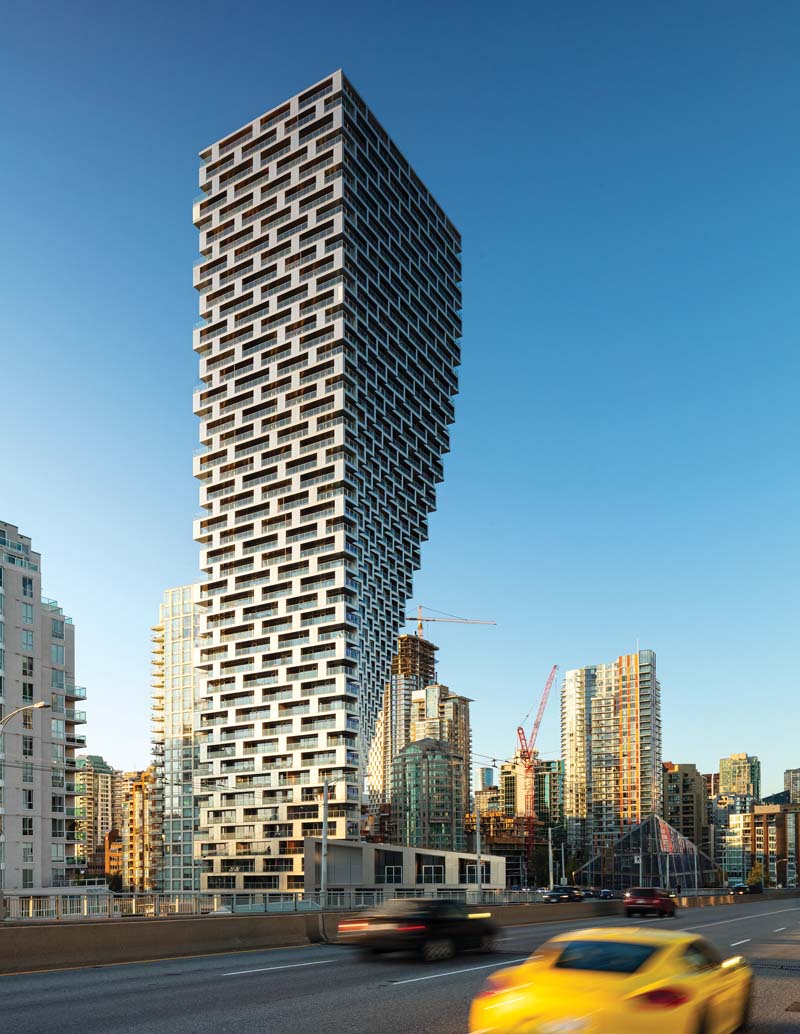
What Multi-Family Fire Protection Covers
Multi-family fire protection is a package of interlocking systems (the fire sprinkler system, the standpipe, the fire pump, the fire alarm system, emergency lighting, the backflow prevention assembly and the fire safety plan), each governed by its own standard, but permitted, commissioned and maintained as one.
In a wood-frame rental block that package may be a single wet pipe sprinkler system fed off a municipal service, an addressable fire alarm panel, unit equipment for emergency lighting, and a backflow prevention assembly on the fire service. In a concrete tower it grows to include a standpipe to NFPA 14, a fire pump to NFPA 20, pressure zoning, a fire department connection at grade, and a high-rise fire safety plan the AHJ must accept before occupancy.
The buyer changes with the phase. During construction it is the developer or the general contractor, and the deliverable is a permitted, hydrostatically tested, commissioned system with as-builts and a turnover binder. After occupancy it is the strata council or the property manager, and the deliverable is an inspection report, a deficiency list, a tag on the valve, and a record the authority having jurisdiction will accept.

NFPA 13 or NFPA 13R: The Decision That Sets the Budget
The NFPA 13 / NFPA 13R split is the design decision that determines which sprinkler standard governs a residential building, and it turns on the building’s height, construction type and occupancy as classified by the BC Building Code.
NFPA 13 is the full commercial sprinkler standard. It protects effectively every space in the building (concealed spaces, attics, service rooms, closets and combustible voids) and sizes the water supply for that coverage. NFPA 13R is a residential standard written for lower-rise residential occupancies. It concentrates protection where people sleep and where they escape, in dwelling units, corridors and exit routes, and permits certain concealed spaces, small closets and attic voids to be omitted. Fewer heads, smaller pipe, a lighter water supply, and a materially lower installed cost.
A six-storey wood-frame building and a concrete tower are therefore not the same job with a different floor count. They are different standards, different hydraulic designs and a different price per square foot. Poseidon confirms which standard the BC Building Code requires for the specific building, and confirms it with the AHJ, before shop drawings are produced, because learning the answer after the drawings are sealed is the most expensive way to learn it.
What the standard changes
- Head count and head type: concealed pendent, sidewall, residential listing
- Coverage of concealed spaces, attics, balconies and service rooms
- Pipe sizing, hydraulic calculation and required water supply
- Whether a fire pump (NFPA 20) is needed to make the design work
- Installed cost, and the cost of every future alteration to the system
High-Rise: Standpipes, Fire Pumps and Pressure Zoning
A standpipe system is a network of vertical piping and hose valves that delivers water to firefighters on every floor of a building too tall to be reached by hose lines run from the street.
Above a certain height a residential building stops being a sprinkler job and becomes a water-delivery problem. The standpipe, designed to NFPA 14, is fed through the fire department connection and, in most towers, boosted by a fire pump designed to NFPA 20. Pressure zoning splits the building vertically so the lower floors are not over-pressurised while the top floors still see the residual pressure the design demands. Pressure-reducing valves, hose valves, the alarm check valve, waterflow switches and tamper switches all enter the commissioning scope, and the inspection scope forever after.
Poseidon installs and commissions these systems for general contractors in Vancouver, Burnaby, Coquitlam, Richmond and New Westminster, and returns to test them on the cycle NFPA 25 sets. A tower also needs a high-rise fire safety plan the fire department will accept: a separate deliverable, and one on the critical path to occupancy.

The Depreciation Report Is the Trigger Document
A depreciation report is a planning document prepared for a BC strata corporation that inventories the common property, estimates the remaining service life of each building system, and projects what it will cost to renew them.
Under the Strata Property Act a strata corporation has a statutory duty to repair and maintain common property, and the sprinkler piping, risers, standpipe, fire pump, alarm panel, emergency lighting and backflow assembly are common property. Depreciation reports are obtained on a recurring cycle set by the Act, and each one forces the council to look at those systems again with a number attached. Corroded black steel piping, an obsolete fire alarm control panel, sprinkler heads past their service life, a fire pump with no parts support: put a replacement year and a dollar figure beside any of them and capital planning starts.
That is the moment a strata council needs a contractor, not another consultant. Poseidon provides a condition assessment of the existing fire protection systems, a written scope of work, and a phased quote the council can price against the contingency reserve fund and take to a vote. Property managers use exactly that document to move a line item out of a depreciation report and into an approved project.
The Recurring Work: Inspections, Backflow Tests and Load Tests
Inspection, testing and maintenance (ITM) is the recurring program of scheduled inspection, functional testing and deficiency reporting that keeps a building’s fire protection systems certified and its records defensible.
For a strata building that means sprinkler ITM to NFPA 25 as referenced by the BC Fire Code, fire alarm inspection to CAN/ULC-S536, a load test on the emergency lighting unit equipment and remote heads, and an annual test of the backflow prevention assembly. In Port Coquitlam the Building and Plumbing Bylaw is explicit: all backflow prevention devices are to be tested annually, commencing on the final inspection date for the device, and a certified tester must submit the results to the City on the City’s test form with the applicable fee. Poseidon files that form; the strata does not chase it. Deficiencies found are corrected by the same Red Seal sprinkler fitters who found them: the difference between a report and a resolution.
What the strata council receives
- Sprinkler inspection and test report to NFPA 25
- Fire alarm inspection report to CAN/ULC-S536
- Backflow test results submitted to the municipality by a certified tester
- Emergency lighting load test record
- A priced deficiency list the council can act on, line by line

Retrofits and Upgrades in an Occupied Building
A sprinkler retrofit is the replacement or upgrade of fire protection in a building that is already occupied, staged so that residents are never left unprotected and never permanently displaced.
Occupied work is a scheduling discipline as much as a trade. The system is staged down one riser zone at a time; shutdown windows are booked with the property manager and noticed to residents; the closed valve is tagged; the monitoring company and the AHJ are notified before the water goes off, not after. While any portion of the system is impaired, the BC Fire Code requires that alternative protection be maintained: in practice, a fire watch patrolling the affected floors for the duration. The system is then restored, flow-tested and re-tagged.
Poseidon has done this work out of Port Coquitlam since 2019, across Coquitlam, Port Moody, Burnaby, New Westminster, Maple Ridge, Langley and North Vancouver. The crews are Red Seal–certified sprinkler fitters; the company is ASTTBC-registered and COR certified, carries WorkSafeBC coverage in good standing, and provides a certificate of insurance and clearance letter on request: the file a property manager needs before a contractor is let through the lobby.
Frequently Asked Questions
Does a wood-frame apartment building need NFPA 13 or NFPA 13R?
It depends on the building’s height, construction and occupancy as classified by the BC Building Code: NFPA 13R is written for lower-rise residential buildings, while NFPA 13 is the full commercial standard required above that envelope. The difference is not academic: NFPA 13R permits certain concealed spaces and closets to be omitted, which changes head count, pipe sizing and installed cost. Poseidon confirms the governing standard with the authority having jurisdiction before shop drawings are produced.
Is the fire sprinkler system common property in a BC strata?
The sprinkler piping, risers, control valves, standpipe, fire pump and alarm panel serving the building as a whole are common property, and a strata corporation has a statutory duty under the Strata Property Act to repair and maintain common property. That is why fire protection appears in the depreciation report alongside the roof and the envelope. It is a council responsibility funded from strata funds, not an individual owner’s problem.
Our depreciation report flagged the sprinkler system. What happens next?
The next step is a condition assessment: a physical inspection of the piping, heads, valves, riser and fire pump to establish what is actually failing and what can be staged over time. Poseidon turns that into a written scope of work and a phased quote a strata council can price against the contingency reserve fund and put to a vote. The report tells you there is a problem; the assessment tells you what the fix costs and in what order it can be done.
Can sprinkler work be done while residents are living in the building?
Yes, occupied multi-family work is staged riser zone by riser zone, with booked shutdown windows, resident notices, a tagged control valve and notification to the monitoring company and the AHJ. While any part of the system is impaired the BC Fire Code requires alternative protection be maintained, which in practice means a fire watch for the duration of the shutdown. The system is restored, tested and re-tagged before the crew leaves.
Does the backflow assembly on our fire line need to be tested every year?
In Port Coquitlam, yes: the Building and Plumbing Bylaw requires all backflow prevention devices to be tested annually, commencing on the final inspection date for the device, with the results submitted to the City on the City’s test form by a certified tester. Other Metro Vancouver municipalities run their own cross-connection control bylaws with their own submission requirements. Poseidon tests the assembly and files the paperwork with the municipality on the strata’s behalf.
Related Fire Protection Services
Multi-family work draws on the whole Poseidon scope. New buildings start with sprinkler installation and the fire alarm system that supervises it, while occupied buildings run on annual inspections and testing, backflow prevention on the fire service, and emergency lighting load tests in the corridors and stairwells. Every tower also needs a current fire safety plan the fire department will accept, and our credentials are the ones a property manager needs on file before work starts.
Qualified, Insured, Prequalified
Poseidon Fire Protection is an ASTTBC-registered fire protection contractor whose sprinkler fitters hold Red Seal certification.
Areas We Service
Poseidon Fire Protection is a Port Coquitlam fire protection contractor serving commercial, strata and industrial properties across Metro Vancouver, the Fraser Valley and the Sea to Sky corridor.
- Metro Vancouver: Vancouver, Burnaby, Surrey, Richmond, Coquitlam, Port Coquitlam, Port Moody, New Westminster, North Vancouver, Delta
- Fraser Valley: Langley, Maple Ridge, Abbotsford
- Sea to Sky: Squamish, Whistler, Pemberton

Put a Number Beside the Line Item
Send Poseidon the depreciation report, the drawings or the deficiency list. Developers and general contractors get a scoped quote for NFPA 13 or 13R installation; strata councils and property managers get a condition assessment, a written scope of work and a phased price they can take to a council vote. Certificate of insurance and clearance letter provided on request.