




Inspection, Testing & Maintenance
Fire Inspection, Testing and Maintenance (ITM) Programmes
Inspection, testing and maintenance (ITM) is the scheduled programme of inspections, functional tests and corrective maintenance that keeps a building’s fire protection systems certified and in service in the years between installation and a fire. It is not a visit; it is a cycle, and the proof that the cycle was kept is what an insurer, an authority having jurisdiction (AHJ) and a strata council’s minutes will ask you to produce. Poseidon Fire Protection runs ITM programmes on four systems (water-based sprinkler under NFPA 25, fire alarm under CAN/ULC-S536, backflow assemblies under CSA B64.10, and emergency lighting) for property managers, strata councils, developers and general contractors across Metro Vancouver, the Fraser Valley and Sea to Sky.
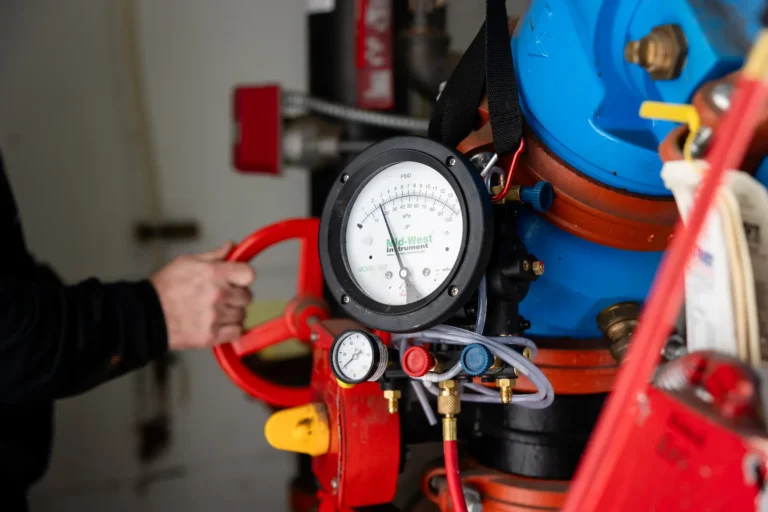
Sprinkler ITM Under NFPA 25
Sprinkler ITM is the inspection, testing and maintenance of a water-based fire protection system (its riser, control valves, waterflow and tamper switches, gauges, sprinkler heads and fire department connection) carried out on the fixed inspection cycle set by NFPA 25 as referenced by the BC Fire Code.
A sprinkler system spends its whole life doing nothing, which is exactly why it has to be tested. Poseidon’s Red Seal–certified sprinkler fitters work the riser end to end: a main drain test to confirm the supply has not degraded, a waterflow test through the inspector’s test connection to confirm the flow switch signals the panel, control valves confirmed open with their tamper switches supervising, gauges read against design pressure, the fire department connection checked for caps and obstruction. Dry pipe and pre-action systems add air pressure checks, priming water levels and trip testing; ESFR and in-rack systems in a Delta or Surrey warehouse add clearance checks that a change of racking quietly invalidates.
The heads are inspected in place: painted heads, corrosion, a missing escutcheon, a head clipped by a forklift, the wrong temperature rating over a new heat source. So is the spare head cabinet: the first thing an inspector opens and the last thing anybody restocks. Systems we did not install are welcome; we design and install the same systems we inspect.
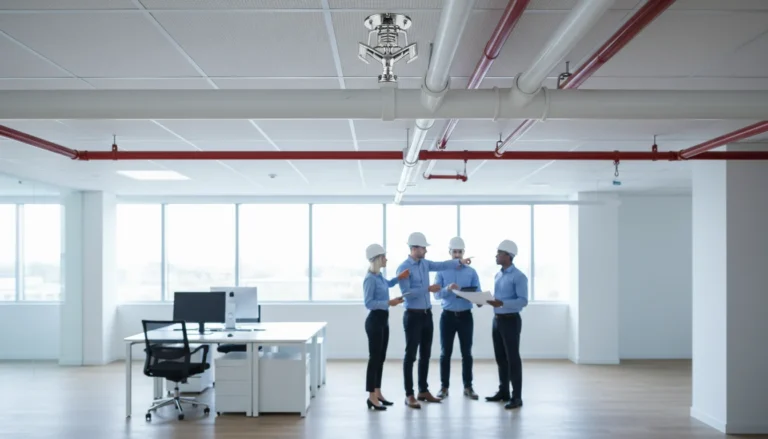
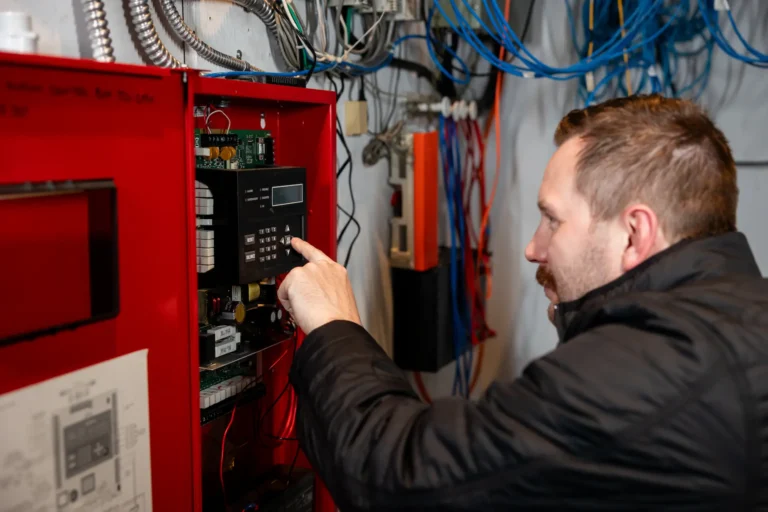
Fire Alarm Inspection Under CAN/ULC-S536
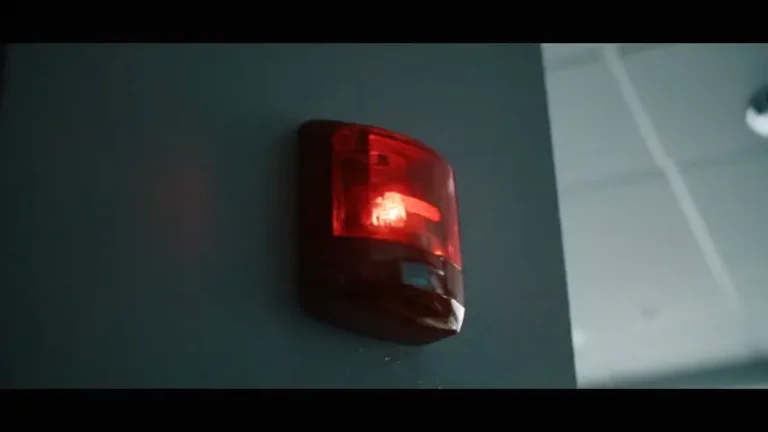
A fire alarm annual inspection is the device-by-device functional test of a fire alarm system (every smoke detector, heat detector, duct detector, manual pull station, horn, strobe and speaker, plus the control panel, annunciator and battery backup) performed to CAN/ULC-S536.
The distinction that costs general contractors money is this: CAN/ULC-S537 verification is a one-time proof that a new or modified fire alarm system was installed correctly, done at turnover before occupancy. CAN/ULC-S536 inspection is the ongoing cycle proving it still works. A verification certificate in the O&M manual does not discharge the inspection obligation, and a building that changed hands mid-project is often a year behind before anyone notices.
On inspection a technician tests each initiating device, confirms it reports to the correct address at the panel and annunciator, sounds the notification appliances, checks audibility, confirms the ancillary functions actually fire (door releases, fan shutdown, elevator recall, magnetic hold-opens), verifies the battery backup carries the system, and confirms every alarm, trouble and supervisory signal reaches the monitoring station. Poseidon also installs and verifies the systems it inspects.
Backflow Assembly Testing Under CSA B64.10
A backflow annual test is the field test of a backflow prevention assembly (the RPZ, double check valve assembly, double check detector assembly or reduced pressure detector assembly protecting a service connection) performed by a certified tester and submitted to the municipality on the municipality’s own form.
Backflow is the line of fire protection ITM written into your city’s bylaw rather than a national standard, and the cities in this region do not agree with each other. Port Coquitlam’s Building and Plumbing Bylaw No. 3710 requires cross connections to be protected by a CSA-listed device meeting CSA B64.10 (s.25.1), and requires that all backflow prevention devices be tested annually, commencing on the final inspection date for the device, with a certified tester completing the test and submitting the results to the City on the City’s test form with the applicable fee (s.27).
Surrey’s Cross Connection Control By-law No. 17988 goes further: premise isolation backflow preventers are required on each of the domestic, fire and irrigation service connections in new construction (s.23), and alterations valued at $400,000 or more trigger premise isolation on all three (s.24). Assemblies are field tested annually, and within 14 days of a new installation or replacement (s.38), by a tester holding BCWWA certification. Offences carry a fine of not less than $100 and not exceeding $10,000, with separate fines for each day the offence continues (s.49–51). This is the item that lapses quietly in a portfolio and then arrives as a letter; see backflow prevention.
Emergency Lighting Load Testing
An emergency lighting load test is the test that cuts unit equipment and remote heads off from normal supply and runs them on their sealed batteries for the duration the BC Fire Code requires, proving the battery will carry the lamp heads when the building actually goes dark.
Emergency lighting is the cheapest system in the building and the one that fails most often, because a sealed battery is a consumable and nobody notices a dead one until the lights go out. A battery reading full voltage at rest will still collapse the moment two lamp heads are put on it, which is why the test is a load test. Technicians walk every unit, remote head and running-man exit sign, run each out on battery, and record the result against a location. Because it is a walk-the-building exercise, it is efficient to run in the same mobilisation as the fire alarm inspection: one attendance, one tenant notice, two systems documented. See emergency lighting.
What You Receive: Report, Deficiency List, Tag, AHJ Submission
An inspection report is the written record of what was inspected, what was tested, what passed and what failed, and it is the document that proves to an insurer or an authority having jurisdiction that a building’s fire protection systems were maintained.
The report is the product. Everything else (the technician, the truck, the gauge readings) exists to produce a defensible document with a date, a technician’s name and a system-by-system result. Poseidon splits the deficiency list into conditions that must be corrected and observations worth budgeting for, so a strata council can tell the difference between a decision and a discussion, and every deficiency is priced so corrective work can be approved without a second procurement round.
Tags go on the riser, the fire alarm control panel and each backflow assembly, because that is where a fire inspector looks first. And the next service date is scheduled before we leave, which is the entire point of running a programme rather than booking a visit.
Every ITM visit produces
- A written inspection report per system, dated and signed by the attending technician
- A deficiency list: must-correct items separated from observations, each one priced
- Tags on the sprinkler riser, the fire alarm control panel and every backflow assembly
- Test records for your building file, your insurer and your AHJ
- Submission of backflow test results to the municipality on its test form, with the fee
- A confirmed next-service date, so no system on the cycle quietly lapses
From Deficiency to Correction
A deficiency is a condition found during inspection that stops a fire protection system from performing the way it was designed to perform: a painted sprinkler head, a control valve found closed, a detector outside its sensitivity range, an emergency light that will not hold its load.
A deficiency list is worthless if the answer is another procurement cycle. Poseidon inspects and corrects with the same crews (Red Seal–certified sprinkler fitters, ASTTBC-registered, COR certified, WorkSafeBC coverage in good standing), so common failures are corrected on the same attendance and larger scopes return as a quotation against the numbered items in your own report. After correction the component is re-tested, re-tagged and the record reissued.
Some deficiencies are not deficiencies at all: they are impairments. A control valve found closed means the sprinkler system is not protecting the building right now, and the BC Fire Code requires alternative protection, normally a fire watch, until it is restored. That gets escalated on the spot rather than written into a report you read next Tuesday; see 24-hour emergency service.
Who an ITM Programme Is For
A fire protection ITM programme is a service agreement between a building owner and a contractor that fixes the scope, the inspection cycle and the reporting format for every fire protection system in a building, for a term.
Property managers running a portfolio buy a programme because they need one schedule, one reporting format and one contractor who can be told the truth about which of forty buildings is behind. Strata councils buy it because it is a budget line they must defend to owners. Developers and general contractors buy it because ITM starts the day the building is turned over, and a first-year lapse is inherited by the strata as a deficiency. Poseidon works with property management and development groups including Associa, Bosa Properties, FirstService and Marcon.
Programmes run across Vancouver, Burnaby, Surrey, Richmond, Coquitlam, Port Coquitlam, Port Moody, New Westminster, Langley, Maple Ridge, Delta, North Vancouver and Abbotsford, and up the Sea to Sky corridor. Taking over from another contractor is routine: we start with an equipment inventory and a baseline inspection, so the cycle you inherit is the cycle you actually have.
Frequently Asked Questions
How often does a fire protection system have to be inspected in BC?
Each system sits on a fixed inspection cycle set by the standard the BC Fire Code references (NFPA 25 for water-based sprinkler systems, CAN/ULC-S536 for fire alarms), and the cycle differs by component, not merely by system, so a single frequency for ‘the building’ does not exist. Backflow assemblies are additionally governed by your municipal bylaw; Port Coquitlam, for example, requires annual testing commencing on the device’s final inspection date. We build the schedule from your equipment inventory and hand you the calendar.
What is the difference between a fire alarm verification and a fire alarm inspection?
A verification under CAN/ULC-S537 is a one-time proof that a new or modified fire alarm system was installed and works as designed, performed at turnover before occupancy. An inspection under CAN/ULC-S536 is the recurring functional test proving the system still works, and it continues for the life of the building. A verification certificate does not satisfy the inspection obligation, and this is the most common gap we find in a first-year building.
What documentation do I hand the authority having jurisdiction?
A dated, signed inspection report for each system, the deficiency list with its corrections recorded, current tags on the riser and the fire alarm panel, and (where your municipality requires it) proof that backflow test results were submitted on the city’s own form. Poseidon issues all of it as a matter of course, so an AHJ request becomes a forwarding exercise rather than a fire drill.
Can you take over an ITM programme from another contractor mid-cycle?
Yes, and it is a large share of what we do. We begin with an equipment inventory and a baseline inspection of the sprinkler, fire alarm, backflow and emergency lighting assets, because the schedule you were handed and the equipment actually installed frequently disagree after a few tenant improvements. From that we issue a corrected cycle, a deficiency list for anything outstanding, and a fixed reporting format.
Who is allowed to test a backflow prevention assembly in BC?
A certified tester. Surrey’s Cross Connection Control By-law requires testers to hold BCWWA certification, and Port Coquitlam requires a certified tester to complete the annual test and submit the results to the City on the City’s test form with the applicable fee. Non-compliance is enforced: Surrey’s bylaw sets fines of not less than $100 and not exceeding $10,000, with separate fines for each day the offence continues.
What happens if an inspection finds a system out of service?
That is an impairment, not a deficiency, and it changes what happens next. The BC Fire Code requires alternative protection (normally a fire watch) while a fire protection system is impaired, so the finding is escalated immediately, the impairment is tagged, and restoration is scoped the same day rather than filed in a report. Our 24-hour line covers exactly this situation.
Related Fire Protection Services
Poseidon inspects the systems it also builds: sprinkler installation to NFPA 13, fire alarm installation and verification, backflow prevention assemblies, and emergency lighting. The equipment inventory an ITM programme produces is also the backbone of your fire safety plan, and when an inspection turns up a system that is out of service, 24-hour emergency service takes it from there.
Qualified, Insured, Prequalified
Poseidon Fire Protection is an ASTTBC-registered fire protection contractor whose sprinkler fitters hold Red Seal certification.
Areas We Service
Poseidon Fire Protection is a Port Coquitlam fire protection contractor serving commercial, strata and industrial properties across Metro Vancouver, the Fraser Valley and the Sea to Sky corridor.
- Metro Vancouver: Vancouver, Burnaby, Surrey, Richmond, Coquitlam, Port Coquitlam, Port Moody, New Westminster, North Vancouver, Delta
- Fraser Valley: Langley, Maple Ridge, Abbotsford
- Sea to Sky: Squamish, Whistler, Pemberton

Put your buildings on a programme, not a panic
Send us the addresses and whatever documentation exists: a prior report, an equipment list, or nothing at all. You receive a baseline equipment inventory, a fixed inspection schedule across sprinkler, fire alarm, backflow and emergency lighting, and after every visit a written report with a priced deficiency list and the records your insurer and AHJ ask for. Certificate of insurance and WorkSafeBC clearance letter provided on request.