




Compliance Hub
Fire Protection Compliance in British Columbia
Fire protection compliance is the building owner’s continuing legal obligation to keep a building’s fire protection and life safety systems installed to the code that governed their construction and maintained to the standards the BC Fire Code adopts, and in British Columbia it is enforced by three separate authorities rather than one. Almost every owner assumes the fire department is the whole story. It is not. This page sets out the two codes, the three enforcement bodies, and which party carries the obligation and the cost.

Two Codes, Two Different Jobs
The BC Building Code is the regulation that governs what gets installed in a building, and the BC Fire Code is the regulation that governs what gets maintained in it once people move in.
This is the most useful distinction in the subject and it is almost never explained. The two codes are separate instruments, enforced by different officials, and they hand off to one another at occupancy. Everything before the handoff, the sprinkler design, the pipe in the ceiling, the fire alarm devices, the standpipe, the fire pump, is governed by the BC Building Code and measured against the installation standards it adopts by reference. Everything after the handoff, for the remaining service life of the building, is governed by the BC Fire Code and measured against maintenance standards.
Both codes work the same way: they do not describe a sprinkler system themselves; they adopt a technical standard and give it force of law. That is why the standards, NFPA 13, NFPA 25, CAN/ULC-S524, CAN/ULC-S536, CAN/ULC-S537, are the documents an inspector actually opens. Knowing which code applies tells an owner which official is at the door and what they can ask for.
The split, in one line each
- BC Building Code – what gets installed. Enforced by the municipal building official at permit and occupancy.
- BC Fire Code – what gets maintained. Enforced by the fire department’s fire inspectors under the Fire Safety Act.
- Municipal cross-connection control bylaw – backflow. Enforced by the city’s water or engineering department.
What the BC Building Code Governs: Installation
NFPA 13 is the fire sprinkler installation standard adopted by the BC Building Code, and it dictates the hazard classification, sprinkler spacing, hydraulic design, seismic bracing and water supply a new system must be built to.
Installation is a permitted, drawn and inspected activity. Sprinkler shop drawings and hydraulic calculations are submitted for permit, the work is built to those stamped drawings, and the municipal building official inspects against them. Smaller residential buildings are designed to NFPA 13R, and one- and two-family dwellings and townhouses to NFPA 13D, less demanding standards with different objectives, so the standard named on the drawing set materially changes what is being bought. Standpipes follow NFPA 14 and fire pumps NFPA 20.
Fire alarm systems have their own path: installed to CAN/ULC-S524, then verified device by device to CAN/ULC-S537 before occupancy. The verification report is a deliverable, not a formality. It is the document that says the system as built matches the system as designed, it belongs in the owner’s file permanently, and its absence surfaces years later when nobody can prove the system was ever commissioned. What a general contractor should receive at handover is itemized on the credentials and prequalification page.
What the BC Fire Code Governs: Maintenance
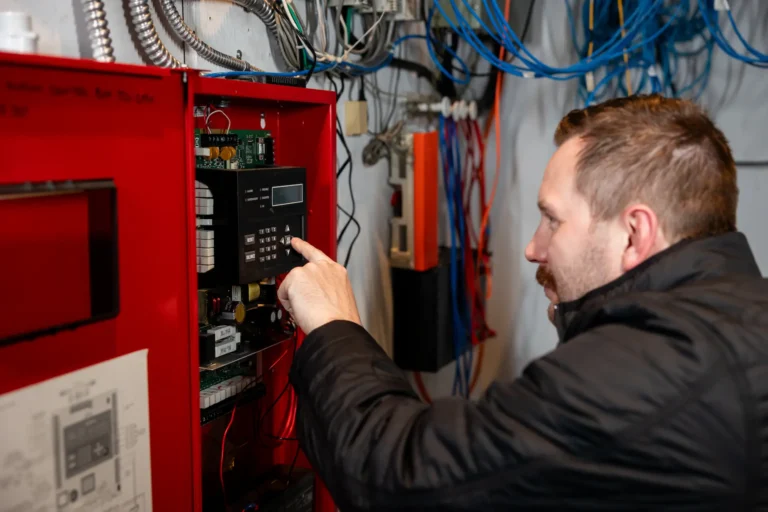
NFPA 25 is the inspection, testing and maintenance standard for water-based fire protection systems adopted by the BC Fire Code, and it is the document your sprinkler system is measured against for the rest of its service life.
The day a building is occupied, the sprinkler system stops being a construction item and becomes a maintenance obligation. NFPA 25 puts it on a fixed inspection cycle, and CAN/ULC-S536 places the fire alarm system on a comparable one. Emergency lighting, exit signage, portable extinguishers and the fire safety plan carry their own ongoing obligations under the BC Fire Code. None of it is optional, and none of it is triggered by an inspector’s visit; the cycle runs whether or not anyone shows up to check.
What the inspection produces matters as much as the inspection. Each visit generates a report, a deficiency list, and updated tags and test records on the devices. Those records are the owner’s proof of compliance, and a fire inspector asking for them is asking for the last cycle’s paperwork, not a verbal assurance. Where a system is found impaired, a closed control valve, a sprinkler system out of service for renovation, the BC Fire Code requires the building to be protected during the shutdown, which is what puts a fire watch in place. See emergency service and system impairment.
The Three Bodies That Enforce Compliance
Enforcement of fire protection compliance in British Columbia is divided among three authorities having jurisdiction, each enforcing a different instrument, holding different powers, and appearing at a different point in a building’s life.
Owners and strata councils routinely assume that passing the fire department’s inspection means the building is compliant. It does not. The fire inspector enforces the BC Fire Code and will not look at the backflow assembly’s test filing. The water department enforces the cross-connection control bylaw and will not look at the fire alarm. The building official enforces the BC Building Code at permit and occupancy, and reappears the moment a permit is pulled for alterations.
Each can act independently, and a building can be in good standing with one while in default with another. The most common failure in Metro Vancouver is exactly that: a clean fire inspection and an overdue backflow test filing at the city, which is a bylaw matter the fire department was never going to raise.
Who enforces what
- The municipal fire department. Its fire inspectors enforce the BC Fire Code under the Fire Safety Act, inspecting the building in service and issuing orders on deficiencies.
- The municipal building official. Enforces the BC Building Code at permit and at occupancy, and again whenever alterations require a permit.
- The municipal water or engineering department. Enforces backflow prevention through the city’s own cross-connection control bylaw, on the city’s form and the city’s schedule.
Who Holds the Obligation: The Owner
The building owner, and in a strata the strata corporation acting for the owners, is the party that holds the fire protection compliance obligation, is the party an order is written to, and is the party that bears the cost.
It is not the tenant. A commercial lease can pass the cost of inspections through as an operating expense, and most do, but that is a private contract between two parties. The code obligation and the enforcement order still land on the owner, and the owner cannot point at a lease to answer a fire inspector. It is not the contractor either. A fire protection contractor performs the work, produces the report and files what the municipality requires, but the record belongs to the owner, who must retain it and produce it on demand.
In a strata, the sprinkler risers, cross mains, standpipes, fire alarm control panel, annunciator and emergency lighting are common property, which makes the strata corporation the responsible owner for these systems. The obligation belongs to the council, the money comes from the operating budget or the contingency reserve fund, and an individual owner cannot decline access to a unit for an inspection the corporation is required to complete.
Backflow: The Compliance Item Owners Miss
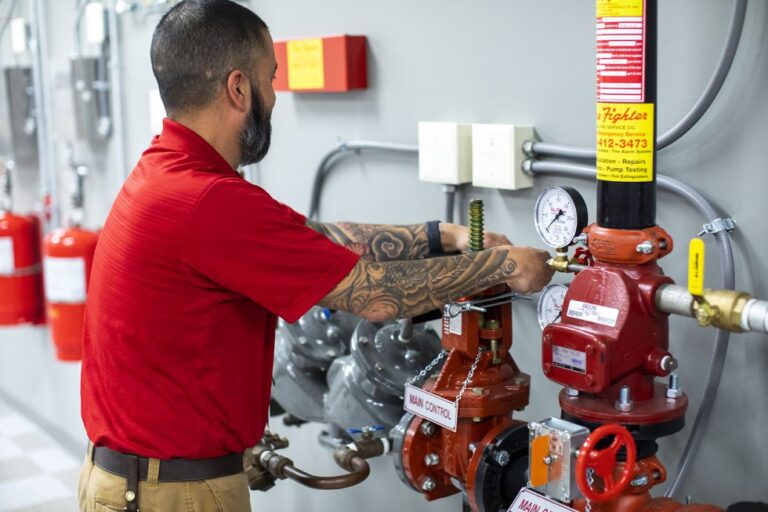
A backflow prevention assembly is a mechanical device installed on a water service connection that stops water inside a building from reversing into the municipal drinking-water main, and it is the one fire protection component enforced entirely outside the fire code.
Backflow assemblies are CSA B64.10 devices, and the obligation to install and test them comes from the municipality’s own cross-connection control bylaw, administered by the water or engineering department. That means a separate test, a separate form, a separate fee and a separate due date that no fire inspector will ever remind an owner about. In Port Coquitlam, Bylaw No. 3710 requires all backflow prevention devices to be tested annually by a certified tester, with results submitted to the City on the City’s test form. In Surrey, Cross Connection Control By-law No. 17988 requires annual field testing and names the fire service connection explicitly.
What owners miss is that a commercial building carries a backflow assembly on the fire service connection, sitting on the same pipe that feeds the sprinkler riser. Testing it takes the fire line out of service, which is a system impairment on the sprinkler system, and most backflow testers are plumbers and irrigation contractors who do not touch sprinkler systems. City requirements are set out on the Port Coquitlam backflow testing and Surrey backflow testing pages.
What Compliance Looks Like on Paper
A compliance record is the documented chain of stamped drawings, verification reports, inspection reports, deficiency lists, test records and municipal filings that proves a building’s fire protection systems were installed to the BC Building Code and have been maintained to the BC Fire Code ever since.
Compliance is not a condition of the building; it is a condition of the file. An owner cannot demonstrate that a sprinkler system was inspected, a fire alarm verified or a backflow assembly tested except by producing the document that says so. When a strata sells units, a commercial building changes hands, an insurer underwrites, or a fire inspector writes an order, the file is the only thing that answers.
Poseidon Fire Protection builds that file as the deliverable. Inspections to NFPA 25 and CAN/ULC-S536 produce a report and a written deficiency list, corrective work produces a record, and backflow tests are filed with the municipality on the city’s form. Poseidon serves commercial, strata, multi-family and industrial properties across Metro Vancouver, the Fraser Valley and the Sea to Sky corridor, from Vancouver and Burnaby to Surrey, Richmond, Coquitlam, New Westminster, Langley, Maple Ridge, Delta, North Vancouver and Abbotsford.
Frequently Asked Questions
What is the difference between the BC Building Code and the BC Fire Code?
The BC Building Code governs what gets installed in a building and is enforced by the municipal building official at permit and occupancy. The BC Fire Code governs what gets maintained once the building is occupied and is enforced by the fire department’s fire inspectors under the Fire Safety Act. A sprinkler system is designed and installed under the first, then inspected, tested and maintained under the second for the rest of its life.
Who is responsible for fire protection compliance, the owner or the tenant?
The building owner is responsible, and in a strata that owner is the strata corporation. A lease can pass the cost of inspections and maintenance to a tenant as an operating expense, but the code obligation and any enforcement order remain with the owner, who bears the cost and must produce the compliance records on demand.
Does passing the fire department inspection mean my building is compliant?
No. The fire inspector enforces the BC Fire Code only. Backflow prevention is enforced separately by the municipal water or engineering department under the city’s cross-connection control bylaw, and the building official enforces the BC Building Code whenever alterations require a permit. A building can pass its fire inspection while sitting in default on an overdue backflow test filing with the city.
Which standards does the BC Fire Code use for sprinkler and fire alarm maintenance?
The BC Fire Code adopts NFPA 25 for the inspection, testing and maintenance of water-based fire protection systems, including sprinklers, standpipes and fire pumps, and CAN/ULC-S536 for the inspection and testing of fire alarm systems. Both place the system on a fixed cycle, and each inspection produces a report and a deficiency list the owner must retain.
What happens if a sprinkler system is out of service during renovations?
A sprinkler system that is shut down is a system impairment, and the BC Fire Code requires the building to remain protected while it is out of service. In practice the impairment is tagged, the monitoring station and the fire department are notified as required, and a fire watch is maintained until the system is restored and the control valve is confirmed open.
Who is responsible for the fire alarm and sprinklers in a strata building?
The strata corporation. The sprinkler risers, cross mains, standpipes, fire alarm control panel, annunciator and emergency lighting are common property, so the obligation to inspect, test and maintain them belongs to the strata corporation and is funded through the strata budget rather than by individual owners.
Related Fire Protection Services
Compliance turns into paperwork through fire inspections and ITM under NFPA 25 and CAN/ULC-S536, and into a document the fire department can read through fire safety plans. The credentials that let a contractor sign those documents are set out under credentials and prequalification, and a system found out of service is handled through 24/7 emergency service.
Qualified, Insured, Prequalified
Poseidon Fire Protection is an ASTTBC-registered fire protection contractor whose sprinkler fitters hold Red Seal certification.
Areas We Service
Poseidon Fire Protection is a Port Coquitlam fire protection contractor serving commercial, strata and industrial properties across Metro Vancouver, the Fraser Valley and the Sea to Sky corridor.
- Metro Vancouver: Vancouver, Burnaby, Surrey, Richmond, Coquitlam, Port Coquitlam, Port Moody, New Westminster, North Vancouver, Delta
- Fraser Valley: Langley, Maple Ridge, Abbotsford
- Sea to Sky: Squamish, Whistler, Pemberton

Find out where your building actually stands
Send the building type, the systems installed and the date of the last inspection, and Poseidon returns a written scope covering the NFPA 25 and CAN/ULC-S536 inspection cycle, any outstanding backflow filing with your municipality, and the deficiency correction needed to close the file, priced and scheduled.